
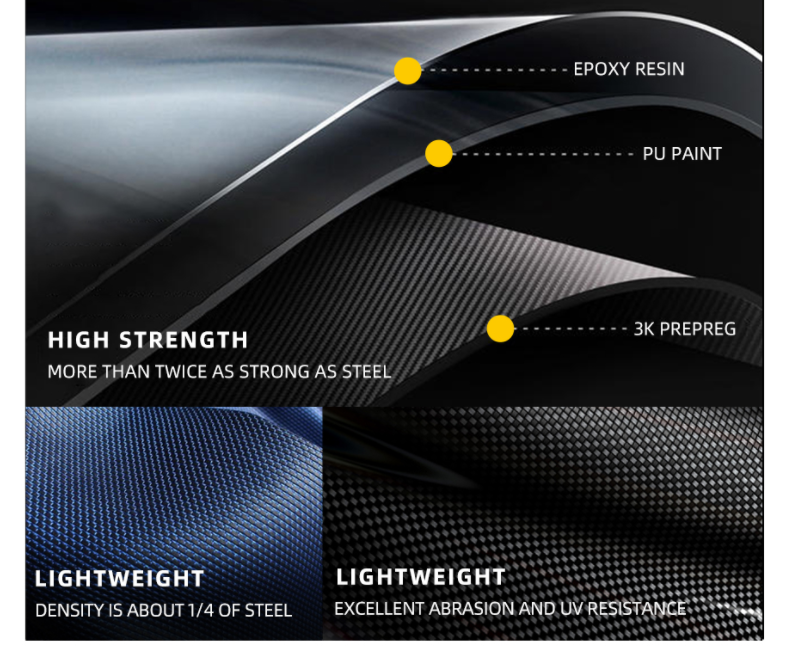
When browsing for custom carbon fiber parts, you’ve likely noticed a massive price gap between two products that look almost identical in photos. One is labeled "Wet Carbon," and the other "Dry Carbon (Pre-preg)."
In 2026, as automotive engineering leans heavier into lightweight EV performance and high-downforce track builds, understanding this distinction is crucial. Is the price premium for dry carbon worth it? Let’s break it down.
What is Wet Carbon Fiber? (The Aesthetic Choice)
Wet carbon fiber is the most common type found in the aftermarket scene. It’s created by laying carbon fabric into a mold and manually brushing it with liquid resin (epoxy).
-
The Process: Hand-laid and air-cured.
-
The Look: It typically has a thick, glossy clear coat that looks very deep and "wet."
-
The Pros: Highly affordable and perfect for cosmetic upgrades like mirror caps or interior dash trims.
-
The Cons: It’s heavier due to excess resin and prone to tiny air bubbles or "yellowing" over time if the resin isn't UV-stable.
What is Dry Carbon Fiber? (The Performance Standard)
Dry carbon (Pre-preg) is the gold standard used in Formula 1 and supercar manufacturing. The "dry" refers to the fact that the resin is pre-impregnated into the fiber at the factory—no manual brushing required.
-
The Process: The part is cured inside an Autoclave (a high-pressure oven). This force-squeezes out every gram of unnecessary resin.
-
The Pros: * 30-40% Lighter than wet carbon.
-
Higher Strength: Minimal air pockets mean the structure is far more rigid.
-
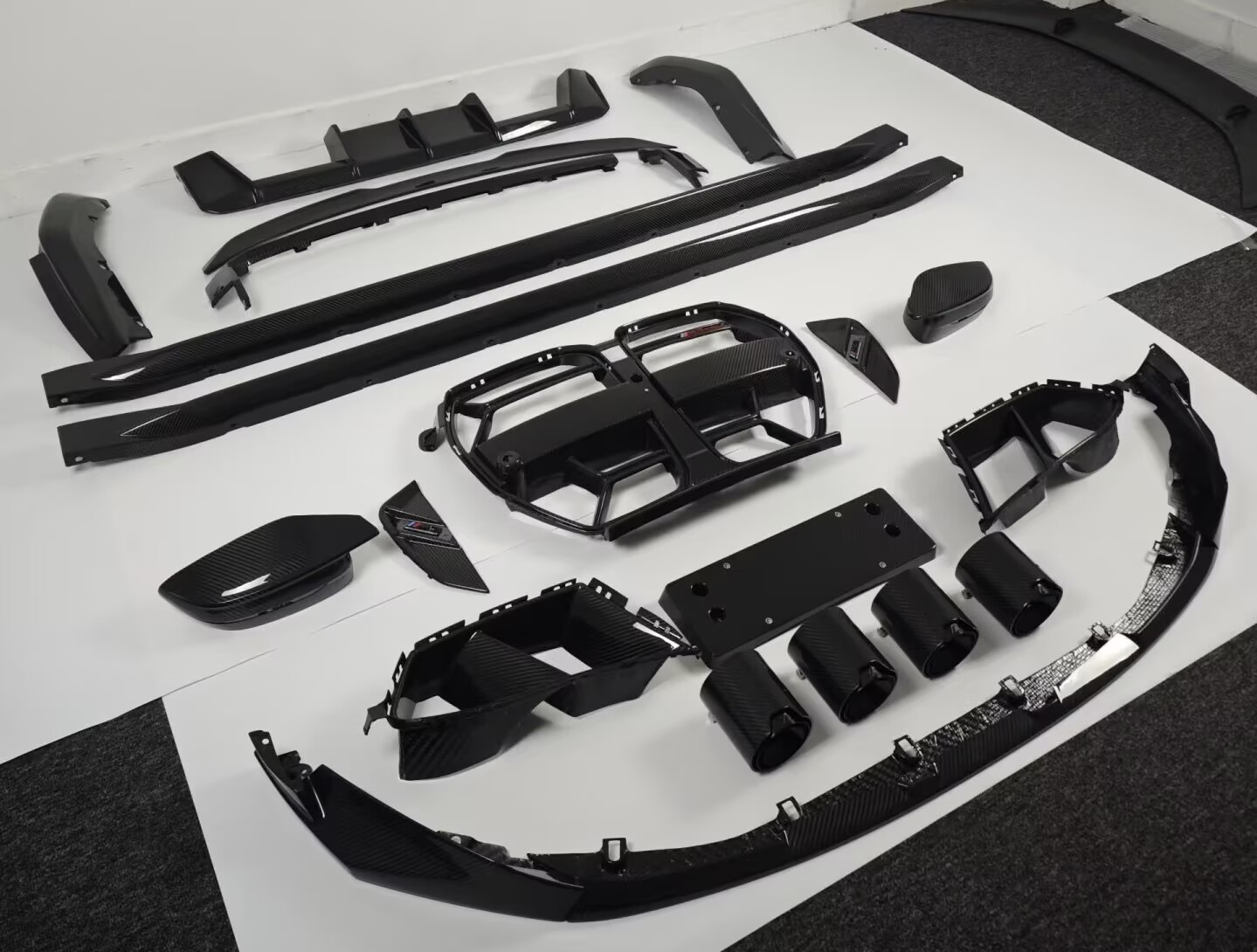
Precision Fitment: Since the mold is vacuum-sealed, the dimensions are incredibly precise—perfect for complex front splitters and rear diffusers.
-
-
The Cons: Significant manufacturing costs and specialized equipment requirements.
Comparison at a Glance: 2026 Tech Specs
| Feature | Wet Carbon | Dry Carbon (Pre-preg) |
| Weight | Standard | Ultra-Lightweight |
| Strength | Good for Street | Race-Grade Rigidity |
| Finish | High Gloss (Thick) | Thin, Crisp Weave (Gloss/Matte) |
| Fitment Accuracy | 90-95% | 99-100% (3D Scanned) |
| Best For | Daily Drivers / Show Cars | Track Use / Performance EVs / Supercars |
 Why Fitment is the Real Dealbreaker
At [Your Store Name], we’ve seen it all. A cheap wet carbon hood that leaves a 10mm gap at the fender is a nightmare for any car enthusiast.
Because Dry Carbon is cured under pressure, it doesn't shrink or warp. If you are looking for that "OEM+" look where every line aligns perfectly with your factory body panels, Dry Carbon is the only way to go.
Which One Should You Choose for Your 2026 Build?
-
Choose Wet Carbon if: You want the carbon fiber look on a budget and aren't worried about saving every ounce of weight. It’s perfect for side skirts, canards, and interior trim.
-
Choose Dry Carbon if: You drive a high-performance vehicle (M-Series, Porsche, Tesla Plaid) and demand functional aerodynamics. If you want parts that won’t yellow under the sun and offer the best power-to-weight ratio, it’s a no-brainer.
Maintenance Tip: Keep the Glow
Regardless of the type, carbon fiber hates harsh UV rays. We recommend applying a high-quality ceramic coating every 6 months to protect the resin from oxidation and road salt.

Leave a comment
All comments are moderated before being published.
This site is protected by hCaptcha and the hCaptcha Privacy Policy and Terms of Service apply.